Monday, April 23, 2007

Catechetical Session, Easter 5C
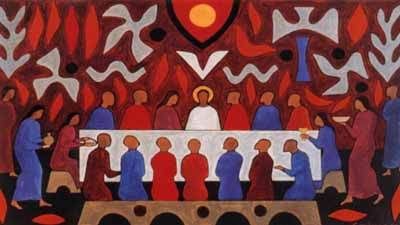
May 6, 2007


Fifth Sunday of Easter, C

Core beliefs

You can discuss one or more of these teachings of the church today. Use your powers of discernment to make your choice based on three criteria:

  1. What have the catechumens been asking about?
  2. What issues came up during the dismissal reflections?
  3. What, in your opinion, needs clarification for the catechumens?
  • God’s plan of salvation
  • The unity of all Christians
  • The dignity of all humanity

Readings

Acts 14:21-27
Revelation 21:1-5
John 13:31-33, 34-35

Catechist Wisdom

Strengthen your wisdom powers by reflecting on the readings yourself before the catechetical session.

The first reading reminds us that the mission of the gospel imposes hardships on the faithful. This isn’t a comfortable message to hear, and it isn’t always expressed powerfully enough to the catechumens. What must be stressed is that they are signing up for a mission to preach salvation to all nations. The travels of Paul and Barnabas are a metaphor for how far and to what lengths we must go to tell the whole world about the life, death, and resurrection of Jesus. God’s deepest desire is that all people be reconciled to God, and we are the agents of that reconciliation. God’s desire to draw all people into the Divine love is so strong that even the unbaptized can be saved if they have a sincere heart. Nevertheless, we find the fullness of God’s promise in complete union with Christ.

The reading from Revelation is a vision of the end of time when the Kingdom of God will be revealed in its fullness. John’s vision takes place on the Lord’s Day, and we can conclude this vision is a liturgical vision. In other words, the Sunday liturgy is always a vision of the fullness of God’s Reign of justice. John sees the full Divinity of God dwelling with the human race. If we believe in John’s vision of humanity, we cannot tolerate any injustice or oppression that would devalue the innate dignity with which we were created. Those who have been made in the image of God must always see themselves as godly.

Our god-likeness is a pure gift that flows from the love of God. In the gospel reading, Jesus makes this crystal clear to the disciples. In the context of the story, they might not yet know the full implications of Jesus’ exhortation: “As I have loved you….” However, John’s community certainly knew and we must make sure the catechumens know that Jesus loved us all the way to the cross. We are called to love others with as much commitment and passion. Jesus could love us that much because of the love he shared with the Father. At our baptism, we are drawn completely into the Divine love of the Holy Trinity and are thereby given the strength to love each other as God loves us.

Teaching Powers

Based on your discernment of the core belief(s) to emphasize today, connect one or more of these church teachings with what the catechumens experienced in the liturgy and what they have experienced in their daily lives this past week. Ask the sponsors to help the catechumens make these connections during the discussion.

    God’s plan of salvation

    (see CCC 777-780)

    • The purpose of the liturgy is the gather those whom God calls. John’s vision in Revelation is just such a gather or a “convocation.” It is an assembly of those whom God's Word calls together to form the People of God. The gathering of God’s people is nourished with the Body of Christ and becomes the Body of Christ.
    • In a very elegant way, the church of believers is both the means and the goal of God's plan of salivation. The church comes into being through the words and actions of Jesus Christ. The ultimate action of Jesus is his death on the cross and his resurrection. Through the subsequent outpouring of the Holy Spirit, the church becomes the Body of Christ and therefore the sacrament of salivation. The church is, however, still human and therefore imperfect. We will be perfected in death and in the resurrection of all believers into glory of heaven just as in John’s vision of the assembly of all the redeemed of the earth (cf. Rev 14:4).
    • The assembly of believers is both visible and spiritual. The church is the Mystical Body of Christ both, human and divine.

    The unity of all Christians

    (see CCC 1271)

    • All those who have been baptized, including those who are not yet in full communion with the Catholic Church, are part of the Mystical Body of Christ.
    • All who have been baptized share in the promise of God’s eternal salvation.

    The dignity of all humanity

    (see CCC 380-384)

    • The very purpose of human existence is to be the image of God in the world. The fullness of this purpose is made manifest in Jesus, the “image of the invisible God” (Col 1:15).
    • Integral to becoming the image of God is entering fully into our relationships with other humans. God did not create us to be solitary being. From the beginning, we were intended to be in relationship, just as the Holy Trinity is in relationship (see Gen 1:27).
    • The original holiness and justice of the first man and woman before sin flowed from their friendship with each other and with God. That is the “paradise” our faith journey leads us back to.

Correlations with protocols from the Office of the Catechism

Saving the World

Ask the catechumens to reflect back what they heard today. Ask them to name one or two practical ways they will put their new learning into practice in the coming week.

Prayer

Close with a prepared prayer or a spontaneous prayer led by one of the team members or one of the sponsors.

Wednesday, April 11, 2007

Five Ways to Preach Mystagogically

These approaches to preaching mystagogically are defined by Jan Michael Joncas in Forum Essay, Number 4: Preaching the Rites of Christian Initiation (Chicago, Illinois: Liturgy Training Publications, 1994) 95-117.

The five approaches outlined by Joncas are:

  1. hallowing cosmic symbols;
  2. exploring anthropological patterns;
  3. celebrating biblical history;
  4. analyzing beliefs and behaviors; and
  5. revealing the future present.

According to Joncas, these are general techniques used by the majority of mystagogical preachers from the 2nd to the 5th centuries of the church. These preachers looked to the phenomenology of the heavens and nature to find correlations with the symbols of the rites. They were keen observers of human ways of life, social structures, and secular activities. They wove images and references to various scriptural passages that evoked the same symbols, whether or not the context of the passage related to the context of the rite. Their catecheses and homilies were often pointed critiques of beliefs and behaviors that went against their understanding of the Christian lifestyle. Finally, they employed a realized eschatology in the use of their images, placing the event of the rite within the vision of the eschaton so as to lead the hearers to praise of God and conversion of heart.

Joncas cautions that the use of these approaches to craft initiatory homilies for today must take into consideration that the world of the 4th century is much different from ours. Advances in our understanding of society, cosmology, scripture, medicine, and even demonology would make a direct translation of these approaches inappropriate for contemporary hearers. Nonetheless, if interpreted and translated into a contemporary style, these approaches can give preachers today some guidelines for crafting mystagogical texts in the patristic tradition.

Five Principles for Mystagogical Preaching and Catechesis

Image courtesy of imageafter.comIn the Rite of Christian Initiation of Adults, only two pages of texts are given to describe the period of mystagogy and post-baptismal catechesis. Below are the five main things you need to know about mystagogy during this period of the initiation process (from RCIA 244-247):

  • Mystagogy and mystagogical preaching leads the neophytes and the community to a deepened grasp of the paschal mystery and helps them make it part of their lives through


    • meditation on the Gospel

    • sharing in eucharist, and

    • doing works of charity.

  • Mystagogy and mystagogical preaching introduces the neophytes into a fuller and more effective understanding of the mysteries through the Gospel and the sacraments.


  • The main setting for mystagogy is the Sunday Mass.


  • At Masses during the Easter season where neophytes are present, it is recommended to use the readings for Year A.


  • Mystagogy and mystagogical preaching renews the inspiration and outlook of the faithful and brings them closer to the neophytes.

Tuesday, April 10, 2007

What is Mystagogy?

Below is part of the unformatted text from a bulletin insert that you can download, print, and copy for FREE for use in your parishes to help you catechize about mystagogy. Please include the author and copyright information on any copies you make.

Get the fully-formatted ready-to-copy bulletin insert (pdf) here.Get the fully-formatted ready-to-copy bulletin insert (pdf) here.


Mystagogy: Savoring the Mystery of God

by Diana Macalintal
© 2007, Diana Macalintal.
All rights reserved.

Image from Imageafter.com. © 2003-2007 image*after and its licencees. Content is copyright-free.Whodunit? Secret? Science?

God is a mystery, but not like an Agatha Christie novel, or a secret reserved only for special people, or a math problem to be solved.

God is a mystery in the way that grandma’s love is a mystery; in the way you look at your child and can’t imagine anything more beautiful; in the way you marvel at how deeply you still love your spouse even after so many years of being together.

The mystery of God is something that makes us feel so immensely close to God and at the same time so in awe of the tremendous, incomprehensible wonder of God. There is no way to completely, fully express this feeling or describe it to another person. We can only say the same thing we tell children who ask us how they will know when they’re in love—“you’ll know it when it happens to you.”

The word “sacrament” comes from the same Greek root for the word “mystery.” Often, at the beginning of Mass, the priest will say, “to prepare ourselves to celebrate these sacred mysteries….” Every time we gather to celebrate the sacraments, we enter deeply into the mysterious love of God.

We experience this divine mystery most fully in the Eucharist—that intimate act of eating and drinking together with those named after the one we love the most: Christ.

Reflecting on the Mysteries

Those who have been preparing to be initiated into the Church and are then baptized, confirmed, and welcomed to the Eucharistic table at the Easter Vigil are the newest members to be “christened,” that is, named “Christ.” They are those who have most recently and fully been hit by God’s mysterious love. Now, they know what it means to be a member of the Body of Christ because they have experienced it for themselves.

Anyone who is new to love and the overwhelming nature of it needs time to reflect on what happened to them. This “looking backward” to a specific moment when they experienced God’s mysterious presence gives them direction and renewed commitment for moving forward. Just like looking back at wedding pictures can give us more hope and joy for the future, reflecting on the experience of the “mysteries”—the sacraments—can renew our commitment to live according to Christ’s name which was given to us at baptism.

The neophytes are those who were recently initiated into the Church through the sacraments of baptism, confirmation, and Eucharist. During the Easter season, and often throughout the year after, they spend time reflecting on the mysteries. This process is called “mystagogy.” But their practice of mystagogy is simply a participation in what all baptized Christians are called to do. All of us who are baptized, whether last year or many years ago, are called to constantly reflect on our experience of God, discern its meaning, renew our commitment to our baptismal promises, and commit ourselves to living those promises in the ordinary events of our daily life.

Click here to read a step-by-step way to do mystagogy.

Mystagogy My Mother Could Do

Caring Mother, by losiek on Flickr, Attribution LicenseThe content of faith is the content of my mother’s or any mother’s life. That is because faith happens in and through our daily life. What we do on Sunday is simply one expression of our faith. We need to connect the messy un-“holy” events of daily life with God and all the things we call “holy.” But the most common mistake people make when trying to make sense of life and faith is they go into “Hallmark greeting card” mode. That is, when they talk about faith, they give religious platitudes like “God loves me,” or “Jesus answered my prayer.” Though these may be true, they won’t necessarily lead to conversion. In other words, it won’t change the world; but mystagogy will. This way of reflecting makes faith relevant to daily life, and makes daily life an expression of faith. But you don’t need a theology degree to be a “mystagogue.” Here are some simple steps to uncovering the mystery of faith that even my mother could do.

Step 1: Choose an event
Sharing faith starts with an event that engages us or makes us feel deep emotion. Family reunions, Easter dinner, graduation, a child’s birth, friend’s death, the shared experience of watching a movie or hearing a song—all these are ripe with moments in which the mystery of faith can be uncovered. During the event, pay close attention to all your senses (what you see, hear, touch, taste, smell) and to what you feel. Engage fully in the experience.

Step 2: Remember what happened
After the event, gather with others who experienced the same thing. Ask these questions: What did you see? What did you hear? What do you remember most? How did that make you feel? Be very concrete in your memories. For example, “I smelled bread baking when I came in the door, and that made me feel welcomed, like I belonged there.”

Step 3: Reflect on the bigger picture
What else is going on in your life that needs to be connected to this concrete experience and memory? What issues is your family dealing with? What concerns do you have at work? What are some major events happening in your community or in the world? For example, “That smell of bread baking makes me think of my own family and how I worry about making sure they have enough to eat. I worry about my job and if I’ll still have it next month. I think also of the man I see every morning on the street corner asking for money for food.”

Step 4: Connect with your faith
In this step ask what this memory teaches you about God, about Christ, about church, about community. For example, “My feeling of belonging when I smelled that bread baking teaches me that family can be anyone I share food with. It reminds me of all those Bible stories of Jesus eating meals with others and how we share bread and wine with strangers at Mass every Sunday. These strangers we call brothers and sisters because we eat together. It teaches me that no matter what, I can depend on my family, my community.” Find out what the Church and your parish teach about your insight. Connect it to a story in the Bible, and find out what scripture teaches about this.

Step 5: Make a change
This is the “so-what” step. What will you do differently in your life now that you’ve made these connections with your faith? Perhaps you might decide to participate in Communion with different eyes, really looking at each person in the Communion procession as your family. Maybe you’ll choose to begin each dinner with a simple prayer. You might get others in your family or parish to talk more about issues of homelessness and hunger. You can start a support group for those who have lost jobs or are looking for work.

When we reflect on our everyday life experiences in this way, our faith can and will change the world, one mother at a time.

This article by Diana Macalintal originally appeared in Eucharistic Ministries #233, August 2003.

Monday, April 9, 2007

Catechetical session, Easter 4C

April 29, 2007


Fourth Sunday of Easter, C

Core beliefs

You can discuss one or more of these teachings of the church today. Use your powers of discernment to make your choice based on three criteria:


  1. What have the catechumens been asking about?
  2. What issues came up during the dismissal reflections?
  3. What, in your opinion, needs clarification for the catechumens?


  • The Holy Trinity
  • Apostolic mission of the church
  • Salvation of all creation


Readings

Acts 13:14, 43-52
Revelation 7:9, 14-17
John 10:27-30


Catechist Wisdom


Strengthen your wisdom powers by reflecting on the readings yourself before the catechetical session.

Through the story of Paul and Barnabas, the first reading highlights the church’s universal mission to preach the Good News of salvation to all the world. The “Gentiles” are a metaphor for all those in the world whom God loves. We, as members of the church, take the energy, passion, and courage of Paul and Barnabas as our inspiration.

The second reading gives us a vision of the “destination” of our salvation. The goal of salvation is complete love and unity, with no divisions, among all the nations and races of people and with God in heaven. This is a reflection of the unity of the Holy Trinity.

The gospel reminds us that it is the love of Christ that is the source and cause of our salvation. It is an intimate love, a love that is shared between Christ and the Father. The dynamism of their love is a creative Spirit, so real and powerful that it makes them (and us) one.

Teaching Powers

Based on your discernment of the core belief(s) to emphasize today, connect one or more of these church teachings with what the catechumens experienced in the liturgy and what they have experienced in their daily lives this past week. Ask the sponsors to help the catechumens make these connections during the discussion.

    The Holy Trinity

    (see CCC 261-267)

    • The mystery of the Trinity is the core belief of all our beliefs. It is foundational to all the rest of what we believe. Like the mystery of love, we can never fully understand it. However, with God's help, we will grow to know more and more about the Holy Trinity.
    • One of the ways we grow to understand the Trinity is through Jesus' incarnation. Jesus reveals God to us, and we realize he is one with the Father.
    • We also know that through Jesus' death and resurrection, the Holy Spirit was poured out upon the church. The mission of the Holy Spirit is exactly the same as Jesus' mission. That understanding reveals to us that the Holy Spirit is one with the Father and the Son. "With the Father and the Son he is worshipped and glorified" (Nicene Creed).
    • We believe that the Holy Spirit proceeds from both the Father and the Son. This was a very important controversy in the fourth century church. It simply means that the Holy Spirit is equally the Spirit of the Father and the Spirit of the Son.
    • We also learn more deeply about the Holy Trinity because, through the grace of baptism, we are drawn into the dynamic life of the Trinity. We learn about the Trinity "up close and personal." We are baptized "in the name of the Father and of the Son and of the Holy Spirit."
    • We do not believe in three Gods. This is important. We believe in only one God. And we believe that God is three separate persons, all equal in glory. It can be confusing to think about, but remember this is not about physical science. It is about an absolute unity of love.
    • Because God is an absolute unity of love, all of God's actions are also one. We cannot assign different jobs to different persons as though the other persons are not involved. The Catechism says it this way: "Within the single divine operation each shows forth what is proper to him in the Trinity, especially in the divine missions of the Son's Incarnation and the gift of the Holy Spirit" (267).

    Apostolic mission of the church

    (see CCC 866-870)

    • The church is one Body. We become part the church and part of the one Body through baptism. In baptism, we are given new life by the one Spirit for one purpose: to bring hope to the world.
    • The life given to the church by the Spirit through baptism makes the church holy. The fact that we are still sinners and yet made holy is what gives the world hope.
    • The holiness we have and the hope we offer is universal. It is for everyone. That's what "catholic" means. We are sent to the whole world, even our enemies, even sinners greater than ourselves, to offer the one hope.
    • This universal sending, and the work we do to proclaim the message of hope, is what we mean when we say the church is apostolic. We follow the example of the apostles and we continue the work of the apostles. We do this under the leadership of the Pope and the bishops who are the successors of the apostles.

    Salvation of all creation

    (see CCC 315, 374, 384)

    • God is the source of all creation and has a plan for creation. Creation itself is a witness to God's love for us. Through the death and resurrection of Christ, God effects the salvation of everything in the cosmos.
    • The salvation of Creation through Christ is so transformative that it is a glorious new creation. Christ restores Creation to it's original holiness before sin entered the world.

Correlations with protocols from the Office of the Catechism

Saving the World

Ask the catechumens to reflect back what they heard today. Ask them to name one or two practical ways they will put their new learning into practice in the coming week.

Prayer

Close with a prepared prayer or a spontaneous prayer led by one of the team members or one of the sponsors.

Saturday, April 7, 2007

Holy Saturday

Angeles, by gmarcelo at stock.xchng, Share Alike License


Today there is a great silence over the earth, for the King sleeps. The earth has trembled and fallen still, for the Lord sleeps in his fleshly nature; in the netherworld he is arousing those who have slept for ages. God is dead in the flesh, and has shaken Sheol to its foundtions.
—From an ancient homily for Holy Saturday

Thursday, April 5, 2007

Bulletin Inserts on the RCIA

by Chance Agrella, courtesy of freerangestock.comAre you looking for some bulletin insert material to help explain the catechumenate process to your parishioners? The United States Conference of Catholic Bishops (USCCB) has a press release on their Web site that details the steps of the initiation process in question and answer format. The text is written in clear, simple English.

Click here to read all the bulletin inserts from the United States Conference of Catholic Bishops.

One example from the USCCB's website is below:

What is the RCIA?

The RCIA, which stands for Rite of Christian Initiation of Adults, is a process through which non-baptized men and women enter the Catholic Church. It includes several stages marked by study, prayer and rites at Mass. Participants in the RCIA are known as catechumens. They undergo a process of conversion as they study the Gospel, profess faith in Jesus and the Catholic Church, and receive the sacraments of baptism, confirmation and Holy Eucharist. The RCIA process follows the ancient practice of the Church and was restored by the Second Vatican Council as the normal way adults prepare for baptism. In 1974 the Rite for Christian Initiation for Adults was formally approved for use in the United States.

Wednesday, April 4, 2007

How to do Mystagogy with the Neophytes in Easter

Cathedral of Our Lady of Peace in Honolulu from wikimedia, Public DomainFrank C. Senn writes about the mystagogical process for neophytes in the early church:

During the week after Easter Day, the neophytes attended the liturgy daily, wearing their white robes, while the bishops instructed them in the mysteries (sacraments) they had just experienced…. The faithful were also permitted to attend these sessions during the “week of white robes” and to ask questions of the bishop as he sat in his chair (cathedra) and expounded upon the mysteries of the faith. (The People’s Work: A Social History of the Liturgy, 70-71.)

Perhaps your bishop would never be able to clear his schedule for daily Mass at the cathedral during Easter Week. But are you sure? Have you asked him? And perhaps the neophytes would not attend in any significant numbers. But are you sure? Have you asked them?

If the bishop in his cathedra, surrounded by the still-damp neophytes, with the faithful also gathered, asking insightful questions is an ideal that just can’t happen in your diocese, how close could you come? Here are some possibilities. Click on comments to add your own ideas:

  1. In larger dioceses, ask one or more of the associate bishops to fill in.
  2. Ask the deans or monsignors of the diocese to each take a day of “cathedra” duty during Easter Week.
  3. Ask the bishop to write a mystagogical homily for each day of Easter Week that might be read or adapted by the homilists of the diocese.
  4. Record the bishop’s mystagogical homilies and upload as podcast on the diocesan Web site.
  5. Provide a place on the Web site for the faithful to ask questions of the bishop about his homilies.
  6. Focus smaller. Invite the neophytes of a given deanery or region to gather for weekday liturgy and mystagogical preaching.
  7. Focus still smaller. Ask your pastor to prepare a series of msytagogical homilies for Easter Week.
  8. For the neophytes who cannot be present for weekday liturgies, e-mail the homilies to them. “Require” them to respond with at least three questions.
  9. In any of the options above, invite the faithful to ask their questions as part of the homily.
  10. Publicize the mystagogical nature of this “week of white robes” throughout the diocese, deanery, or parish.
  11. Begin now to make it clear to the catechumens that they will be expected to be at the liturgies during the “week of white robes” after their own initiation.

Sunday, April 1, 2007

When Do You Dismiss during Triduum?


During the Triduum, the question arises about when to dismiss the Elect and the catechumens. (If you are engaged in a year-round process, you will likely have both.) If parish leaders understand the liturgical role that the unbaptized have in worship, it will be clear that the Elect and the catechumens are dismissed before the priestly action of the liturgy begins.

Holy Thursday

In the Mass of the Lord’s Supper, the first action restricted to the baptized priesthood is the prayer of the faithful. So the Elect and the catechumens would be dismissed before the general intercessions. They would ordinarily be present for and participate in the washing of the feet if your parish chooses to celebrate that option.

Good Friday

Likewise during the Celebration of the Lord’s Passion, the first act exclusively performed by the baptized priesthood is the offering of the General Intercessions. So, just as on Sunday and at the Mass of the Lord’s Supper, the Elect and the catechumens would be kindly dismissed before this prayer.

Who leads them?

In many (all?) communities, it would be a hardship to ask a catechist to leave the worshiping assembly on these days to lead the Elect and catechumens in the dismissal reflection. And, in fact, there is no need to. The Elect will have been participating in dismissal reflections for a year or more by this point. One or more of them should have no difficulty leading the reflection sessions.

Easter

If you are practicing a year-round initiation process, you will have catechumens who will not be baptized at this year’s Easter Vigil. Should they participate in the Easter Vigil? Two pastoral difficulties present themselves in this case. The first is that the powerful symbols and ritual actions of the Vigil may have less impact the second (or third) time around, in the year the catechumens will be celebrating their own initiation. Wouldn’t it be more pastorally effective for them to experience the great Paschal fire, the Exsultet, the extensive readings and prayers of this night, and so on, for the first time on the night of their own baptism?

The second pastoral issue is who would lead them in their dismissal reflection? Unlike the Elect, the catechumens are unlikely to have a great deal of experience with this process, and it would be a great hardship to ask a catechist to be absent for the first time in which the neophytes participate in the Eucharist.

The best solution, perhaps, is to have the catechumens present at the Easter Sunday liturgy—along with the neophytes in their white robes—and to ask a catechist to lead the dismissal at that liturgy.


Triduum Dismissal


When do you dismiss?


We dismiss the Elect and the catechumens from the Mass of the Lord's Supper.
We dismiss the Elect and the catechumens from the Celebration of the Lord's Passion.
We dismiss the catechumens from the Easter Vigil.
We dismiss the catechumens from the Easter Sunday liturgy.
We do not dismiss anyone during the Triduum

 Current Results


Saturday, March 31, 2007

The Four Essential Doctrines the Liturgy Teaches

A recurring question among catechumenate team members is, what do the catechumens need to know before they can be initiatated. And some are often doubtful the liturgy, which is the source of all catechesis, can in fact teach them what they need to know. Cardinal William Levada, prefect of the Congregation for the Doctrine of the Faith, laid out this lesson plan at the 150th anniversary of the American College Louvain on March 17, 2007.

The most important doctrines remain the same through the ages and need to be approached again and again by theology and in our preaching; namely,
  • the divine and human natures of Christ;
  • their union in the divine person of the Son;
  • and the mystery of the Holy Trinity
  • which Christ reveals in his Paschal Mystery.

I am not suggesting that theologians and preachers ought simply to stand up and talk more about these things. Rather, I am drawing our attention once again to the fact that these doctrines are the deepest sense of what the Scriptures proclaim and that this deepest sense was discovered precisely when the Scriptures were proclaimed in the liturgical assembly and when the Scriptures became sacrament in the eucharistic rite.

You can read his entire homily here. [via Whispers]

Friday, March 30, 2007

How Do I Become Catholic? - Part 1: God is calling. Now what?

The following is Part 1 of a brief overview by Diana Macalintal of the initiation process for adults considering becoming Catholic. Based on material originally written for the Diocese of San José website, you are welcomed to use or adapt it for your own parishes.

Click here to download a formatted handout (pdf) of this article which you can copy for free.

===

How Do I Become Catholic?
Part 1: God is calling. Now what?
by Diana Macalintal

© 2007, Diana Macalintal.
All rights reserved.

Learning to Respond
God works in many different ways. Most of the time, God works through ordinary people and events—a parent, a friend, a beautiful sunset, a song, an inspiring story. Other times, we hear God’s call during crisis moments or major life-changes—a birth, an engagement, a sickness, a death. Sometimes, we just have a feeling that something is missing. No matter what your reason for thinking about becoming Catholic, our hope and prayer is that when God calls, you will respond. (If you’re reading this, you’ve already begun to respond!)

One part of the Catholic Church’s mission is to help people respond to God as best they can. For Christians, initiation and on-going participation in the life of the Church are the primary responses to God’s call. Through the process of becoming Catholic, we try to help people learn how to respond to that call not just for the moment of baptism but for everyday of their lives. The way we learn how to respond is by actually doing what Catholics do. So the process of becoming Catholic is not so much about learning things as in a classroom but learning a way of life as an apprentice learns from a master and that master’s community.

Becoming an Apprentice
Becoming Catholic is like an apprenticeship. In the art department of a university I attended, there was a “master potter” who was the teacher for all the pottery students. But his students didn’t really have classes in a classroom like you would have at a school. What they did have was a lifestyle, or a discipline, and they all agreed to live by that lifestyle. In their discipline, the master potter agreed to teach them everything he knew, and the students agreed to watch the potter and follow his example. In a way, they became his disciples.

Every so often, the potter showed them a new skill, like making a tiny tea cup, while the students watched. Then he told them, “Make 100 tea cups like this every day for the next month. When you can do that, then you’re ready to go on to the next step.”

Yet the potter wasn’t only teaching skills; he was also introducing them to the lifestyle of a being a potter. So he had them eat together (using the plates and cups they made), talk about life with each other, take walks together looking at nature for inspiration, and even chop wood together for the kiln that fired their pottery. Little by little and day by day, the students were becoming potters themselves, learning by watching the master, doing as he did, and living as he lived.

Becoming Catholic is a lot like this. There are stages to follow, benchmarks to watch for, and disciplines to be learned and lived before moving on the next step. The process is called the Rite of Christian Initiation of Adults (often called RCIA). In Part 2: Beginning the Process of Becoming Catholic, we’ll look at the first stage of this apprenticeship into Christian life.

Is Your Dismissal Pastoral Enough?

The most pastoral thing we can do
for the
catechumens
is to “kindly dismiss” them, before the prayer of the faithful begins....

I have a friend, a good friend, who also happens to be a priest. He is dead sent against dismissing the catechumens from the liturgy before the general intercessions. Whenever he presides at a liturgy with catechumens present, he will call them forward for dismissal after the intercessions. He thinks it is more pastoral for them to learn to pray with the worshiping community, particularly in this important prayer of the assembly.

What isn’t clear to my friend and isn’t clear to a lot of parish leaders is the hierarchical role of the various orders in the assembly. In a typical parish on Sunday, there are likely to be present three or four orders: the catechumenate, the faithful, the presbyterate, and sometimes the diaconate. Each of these orders has a distinct part to play in the liturgy. The various parts and their cooperative action are a metaphor for the parts of the Body of Christ. Just as an arm cannot do the work of a leg, those who are in the order of the faithful cannot do the parts assigned to the order of presbyters. Nor can catechumens do the priestly work of the faithful.

To offer the prayer of the faithful is a sacrificial act. Therefore, it is a role for the baptized priesthood. Those in the order of the catechumens do not yet share in this formal intercession for the needs of the church and the world. Likewise, they are not yet empowered to participate in the great sacrifice of praise that we offer in the Eucharist. The General Instruction of the Roman Missal says, “The meaning of the [Eucharistic] Prayer is that the entire congregation of the faithful should join itself with Christ in confessing the great deeds of God and in the offering of sacrifice” (78).

Note the participation of the order of the faithful in the Eucharistic Prayer is not first of all about participation in Communion. Thus, baptized candidates seeking reception into the Catholic Church—as well as Catholics who may be restricted from sharing in Communion, and indeed any baptized person—are encouraged to participate in the offering of the sacrifice of the Mass. (See Catechism of the Catholic Church, 1271-1273, 1651.)

In the liturgy, the role of the catechumens is to conform their hearts and minds more fully to Christ in preparation for their baptism “which will join them to God’s priestly people and empower them to participle in Christ’s new worship” (RCIA, 75.3). However well intentioned it might seem, it is not a pastoral act to prematurely anticipate that unity. The most pastoral thing we can do for the catechumens is to “kindly dismiss” them, before the prayer of the faithful begins, to do the work of conforming their hearts and minds to Christ. (See RCIA, 118.)


Tuesday, March 27, 2007

Honoring the Baptized

Let's suppose you want to honor the baptized by celebrating their reception into the Catholic Church at the first Sunday Eucharist after they are ready. How do you deal with the pastoral issue that they will feel like they are missing something in comparison with the Elect who will be baptized at the Great Easter Vigil? The key is, from the beginning of their relationship with the parish, to identify them much more closely with the Order of the Faithful than with the Order of the Catechumens. Here are several strategies.

  1. Remember the Rite of Welcome is optional. As presented in the RCIA, there are a great many similarities to the Rite of Acceptance. It would help the baptized candidates for reception identify more closely with the faithful if you skipped the Rite of Welcome altogether. Instead, use an adaptation of the very simple Order for the Welcoming of New Parishioners from the Book of Blessings.
  2. Separate the candidates for reception and the candidates for baptism into different catechetical groups. Every parish is supposed to have ongoing formation for its members. The baptized candidates can be integrated into that formation process while the catechumens remain in the catechumante. If your parish does not yet have ongoing adult faith formation, use the arrival of the candidates for reception as a spur to start.
  3. Set up separate sponsor training. The needs of the baptized will be different than the needs of the unbaptized, and the sponsors for each group will require different skills. The ideal sponsors for the candidates for reception will be Catholics who were baptized as infants and cannot imagine any greater joy than to have Christians all their lives. Their very being should communicate what a great gift the candidates for reception have had all these many years.
  4. Do not delay their reception. Baptized candidates may be, and should be, received at any Sunday liturgy. Some will require relatively little catechesis and others significantly more. However, whenever the community discerns a candidate is in fact ready, he or she may be received. If some of the other candidates are not yet ready, their reception would take place after more formation has better prepared them.
  5. Be sure to receive all those who are ready before Ash Wednesday so the candidates for reception can participate fully in the initation of the Elect. They should understand their mission as disciples is to "go and baptize," and not to wish they could get themselves re-baptized.
  6. Give these brand new Catholics a major role at the Easter Vigil. They should be right up at the font, helping the Elect into the water, handing them towels as they emerge, escorting them to their chaning rooms, assisting the presider with holding the oils or books during the chrismation, serving as communion ministers, and so on. Yes, there has to also be room for the regular ministers of the parish to serve in these roles, but they could do so as mentors and guides to the new Catholics.
  7. Ask the newly received Catholics to help serve as hosts and planners for the reception for the Elect. With the help of their sponsors, the newly received Catholics should project an attitidude that says to the neophytes: "We're overjoyed that you are now one of us."

Monday, March 26, 2007

Why Baptized Candidates Should Not be Received at the Easter Vigil

When should baptized candidates be received into the Catholic Church?

Paul Turner in When Other Christians become Catholic, says, “Whenever they are ready” (p. 161).

The National Statues for the Catechumenate say, not “at the Easter Vigil lest there be any confusion of such baptized Christians with the candidates for baptism…” (33).

As I talk to folks about this issue, it seems there are several rationales in play. There are those who think of everyone as somewhat equally on a conversion journey. Believing that, there would seem to be little difference between the faith of a catechumen, a baptized candidate seeking reception into the Catholic Church, and the average Catholic who celebrates Mass every Sunday. There is something to be said for this point of view. After all, if a thousand years is as a single day to God (2 Peter 3:8), what can the meager differences in our faith lives seem like?

Another group of folks would tend to see the catechumens and the candidates for reception as people who have had a religious awakening. They have been led by the Holy Spirit to the Roman Catholic Church because they understand Roman Catholicism to the fullest expression of their newly awakened faith. The catchechumens and the baptized candidates for reception are both groups of seekers joining the Catholic Church.

And there might be a third kind of initiation team that would see the catechumens and the uncatechized baptized candidates for reception as beginners on the faith journey. Those who have been baptized and somewhat catechized (or maybe even well catechized) are different from the beginners in faith and more like the weekly-Mass Catholics.

All of the parishes that would hold any of these views would be accepting baptized Christians into the Catholic Church at the Easter vigil, although the third group might receive only the previously uncatechized Christians.

The difficulty with each of these rationales or descriptions of particular journeys of faith is that they each assumes some level of accomplishment on the part of the individual. Each position presumes the individual has come to some level (or not) of faith that would determine the ritual celebration of his or her movement from one level of status to another.

What is misunderstood in each instance is that faith is a gift—a total, free, and undeserved gift from God. Baptism is the ritual celebration of that gift, and the sacrament of baptism forever and completely changes a person into one of the chosen, a child of God.

Afterwards, one can then become a heretic, an apostate, a backslider, or the next Mother Teresa, but one can never undo God’s choice. There is an actual and real difference between the baptized and the unbaptized. There is no comparable difference between two baptized people of different denominations. Both are heirs to the kingdom and disciples of Christ. Both are bestowed with the full rights, responsibilities, duties, and privileges of those who belong to Christ.

The entire lenten process, which has its culmination in the Great Easter Vigil, is about marking and celebrating the miracle that God has chosen yet again to name another of us as son or daughter. We should not attempt to diminish the mighty act of God by seeming to ignore the fact that the baptized candidates for reception have already been chosen, “lest there be any confusion of such baptized Christians with the candidates for baptism.”

Tuesday, March 20, 2007

“God Glasses” for the Man Born Blind - A Scrutiny Homily for the Fourth Sunday of Lent

The stories of the man born blind, the woman at the well and the raising of Lazarus from the dead are a set of readings that must always be proclaimed whenever we celebrate the Scrutinies. Why then are today’s readings so important for those who are preparing for initiation? Why are they so important for us who are already baptized?

These readings teach us about our baptismal promises. The story of the Samaritan woman at the well is not so much about the woman believing in Christ but about the woman fulfilling her role in proclaiming the Gospel. She reminds us that our baptism commits us to a life of evangelization. Likewise, the story of Lazarus is not so much about Jesus raising him from the dead but about having faith in Christ even when it looks like death has won. This story reminds us that we are committed to a life of faith and trust. And the story of the man born blind is not so much about the man being healed, but about seeing as God sees. Today’s Gospel reminds us that we are committed to a life that reveals God’s vision, to a life of constant conversion. This is what I mean by conversion.

If we are sincere about asking God to “open our eyes,” to see as God sees, then we must also be willing to change the way we live our lives so that our lives reflect God’s point to view, and not ours.

Here’s an example of how life changes once you’re given a new perspective. How many of you wear glasses or contact lenses? Then you might know what I am talking about. When I was in the 6th grade, I got my first pair of glasses. When I stepped out of the doctor’s office into the parking lot, the first thing I saw was this tree. Now, I had never in my life seen a tree like that. Before I got the glasses, I thought trees were just blobs of green and brown and red and orange. Theoretically, I knew what a tree looked like. I could see leaves and bark and such. But after I saw them through my new glasses, I realized that a tree was more than just leaves and bark. The leaves had lines, and edges, and curves. There were birds in the trees that I could see. There were cracks and grooves in the bark that I had missed before.

Finally being able to see the detail, the intricacies of nature, and its true beauty is like how God sees each of us. In the first reading, God told Samuel that God doesn’t see as humans see. We can only see part of the picture, what’s on the outside of a person. But God sees deeper, into the heart of that person. God sees the fullness of that person’s potential. God sees that person’s intricate and detailed beauty.

Jesus tells the blind man “you have seen the Son of Man, you have seen the Christ; the one speaking with you is he.” What if each of us could put on some glasses—“God glasses”—that allow us to see that intricate and detailed beauty of each person? Imagine how differently we would act if we remembered Jesus’ words (“you have seen Christ, he is speaking with you now”).

How differently we would act if each time we encountered our co-workers, we saw Christ. How differently we would treat our parents, our children, our spouse, and our classmates, our friends, our enemies. How differently we would treat the people who sit around us in church, the people we see here every week but to whom we never talk, the people who don’t speak our language, the people who don’t look, act, or think the way we do. How differently we would treat the beggar, the homeless, the people we label as failure, as sinner, the people we label as conservative, liberal, gay, straight, too old, too young, too dark, too light, too smart, too dumb, too much of something that doesn’t fit our point of view. Imagine if each time we encounter each other, each time we speak with one another, we “see” Christ, we “hear” Jesus. How different our world would be.

Our Elect are with us here today. In three weeks they will step into that water there in the font. They will be clothed in white and given the light of the Easter Candle. They will be anointed with oil as priest, prophet and king in Christ. And they will stand with us at this table to give thanks and break bread and drink wine, becoming with us what they eat, the Body and Blood of Christ.

Dear Elect, in a moment you will stand in our midst along with your godparents. We will pray for you that God’s light may heal the dark places of your lives and strengthen each of you. Your baptism will change you. It will change your identity. It will change the way you “see” the world, and thus, it will change the way you act within the world. For this is the duty of the baptized: to be imitators of Christ and to see as God sees.

We, the faithful, stand with each of you, not to judge you, not to test you, nor to evaluate you. No, we stand with you to give you the courage and strength that you will need to face those dark places. We will ask God to help you see those moments of failure and weakness as God sees them—not as reasons to condemn you, but as opportunities to love you with an even greater love. Seeing you as God sees you, we give thanks, for you are a sign to us that God is still making all things new.

There’s one thing about getting my glasses for the first time that I will never forget. When I saw that tree and I saw how beautiful it was, all I could do was be amazed and give praise for the awesome wonder of God’s creation. When we see as God sees, all we can do is stand and praise God for showing us a glimpse of heaven.

Monday, March 19, 2007

RCIA Discernment: What is it and How do you do it?

Discernment in the RCIA is most intensely done in preparation for the celebration of the rites. (Click here for an article about discerment for the rites.) Yet the vision of the Rite of Christian Initiation of Adults is that discernment is on-going. Furthermore, discernment is not just something only the catechumens do; it is something they learn by watching the parish and all its members practice discernment in their everyday lives. Ideally, all the faithful do discernment as part of their Christian lifestyle.

But even for the baptized, describing it and learning how to do it can be a little difficult. So here is part of the unformatted text from a bulletin insert that you can download, print, and copy for FREE for use in your parishes to help you catechize your assemblies about the discernment process. Please include the author and copyright information on any copies you make.

Get the fully-formatted ready-to-copy bulletin insert (pdf) here.

***

Rite of Christian Initiation of Adults
Discernment
Listening to God's Voice

by Diana Macalintal

© 2007, Diana Macalintal.
All rights reserved.

Hearing and Responding
A big part of becoming and being Catholic is learning to hear God’s voice and responding. Our Scriptures tell us many stories of people hearing God and responding.

Abraham heard God’s voice from an angel, a “messenger” of God, asking him to sacrifice his only son, Isaac. Confused and probably afraid, Abraham responds by trusting God’s voice (Gn 22). Moses heard God’s voice coming from a surprising and unusual source—a burning bush. He responded to this unexpected encounter with the Divine by taking off his shoes and accepting God’s call to set his people free (Ex 3). The Samaritan woman at the well heard God’s voice in the midst of her everyday chores, in an ordinary conversation with a stranger. She responded to Jesus by becoming the first evangelist proclaiming the Good News to her village (Jn 4). And Mary heard God’s voice in an angel with unbelievable and perhaps terrifying news for one so young—she would bear God’s child. She responded in faith with amen, “let it be done” (Lk 1).

Perhaps Adam and Eve’s sin was not just disobeying God but not responding when he called, for when they heard his voice after eating the apple, they hid themselves (Gn 3).

For discussion: Do you remember a time when you heard God’s voice and knew it was God speaking? Where or who did it come from? What did you feel when you heard God’s message for you? How did you respond?

Voices in My Head?
Unlike some of the Scripture stories, however, we will probably hear God’s voice in much more ordinary ways. Most of us will never have an angel appear to us with a divine message from God. Nor will many of us encounter a burning bush or other supernatural revelation of God. More than likely, we’ll hear God the way the woman at the well did—in a simple conversation with another person while doing the simple things we do everyday—or the way Mary did—in an unexpected turn of events.

As Catholics, we believe that God is constantly trying to reveal God’s self to each person, using the ordinary things we experience in our lives to be the “messengers” for God’s word. In our family, friends, and the familiar events of our life, through the stranger and the new experience, and most especially in the poor, the outcast, and those events that shake us to the core, God is trying to say, “Here I am. Listen.”

At critical moments in our lives, God’s voice may be very strong: at the birth of a new family member or at the death of a loved one; when we fall in love, or when we break up; when tragedy happens or when we are overwhelmed by goodness; when we are deciding on a career, a vocation, a life-long partner; when we are hurt, or when we cannot forgive; when we need to choose a new way of life.

When we hear God’s voice, we might feel unsettled or out of sorts. We might feel that we need to do something, to make a change or be more resolved. Discovering who God intends us to be (our truest self), what God is asking of us at this moment in our life, and making a decision to act is called discernment.

For discussion: When was the last time something critical or significant happened in your life? What was God communicating to you at that moment?

Discerning God’s Call
For Catholics, there are four honored places we listen for God’s voice: in Scripture, in our Catholic tradition and teaching, in the Church community, and in our own conscience. Those who are preparing to become Catholics—the catechumens—participate in an on-going process of discernment throughout their preparation, learning to listen for God’s voice in these four principle ways. They do this to continue growing in their new faith in Christ and to know when they are ready to take the next step toward initiation into the Church. We who are already baptized serve as models for the catechumens, teaching them by our example how to listen for God’s voice each day, especially when we need to make an important decision.

Scripture
The Scriptures reveal who God is and how God relates with his people. The Scriptures project God’s voice most clearly when it is proclaimed in the assembly within the liturgy and connected to the real-life stories of that assembly in the homily. In the Gospel, especially, we believe that Christ is speaking directly to us, calling us again to listen and respond.

In a special way, the catechumens listen and respond to God in the Scriptures by “breaking open” the Word. They are dismissed from the Mass with a catechist to “feast” on the Scriptures and homily they just heard—to chew on them, in a sense—and to discover together what God is calling them to do at that moment in their faith journey.

Church Tradition and Teaching
You can’t find answers in the Scriptures to every one of life’s problems. But you can find Jesus’ promise that the Holy Spirit will remain with us always, guiding us, instructing us in everything (Jn 14:26). That Spirit has led our Church through the ages, inspiring saints and holy women and men to hear and respond to God’s voice in their own time and situation. Church tradition is the collective wisdom and presence of that Spirit, showing us how our ancestors interpreted not only Scripture but also the signs of the times through which God was acting.

Church Community
The apostles didn’t receive the Spirit as individuals but as a community. We believe that in the faithful, there is a “sense” of what God is calling us to be. When two or three are gathered, God is there. And so learning to hear God’s voice is a group exercise. Together we listen for God with those we trust and who know us best—our companions, literally, those we share bread with. Our companions help us to hear and see the things we may be missing. They do this not just by what they say but also by how they live. Catechumens are given special companions called sponsors to help them discern God’s voice throughout their journey to initiation.

For discussion: Who are your companions? Who is looking to you be their companion in faith? How can your own actions model for the catechumens a life of listening and responding to God?

Our Conscience
For those with faith, God’s word is not far from them—“it is something very near to you, already in your mouths and in your hearts” (Dt 30:14). God’s Spirit is in us, guiding our conscience into knowing the path God wants us to take. If after consulting all the other areas of discernment, we still feel uneasy, it may be because our conscience, God’s Spirit in us, knows it is not satisfied. But if after true discernment, we feel at peace, even with a hard decision, we can trust that we have listened and responded well to God’s voice.

A Process for Discernment
When faced with a difficult decision or turning-point in your life, or you just need to know better where God is leading you at this time, try this process.


  1. Pray daily: Praying is less about saying things to God and more about being still to listen to God. Find a quiet place, and just be still and open to what God is trying to reveal to you. Making the sign of the cross, reading the Bible, or praying the Lord’s Prayer may help you focus on being attentive to God.


  2. Participate at Mass: Keep your eyes, ears, mouth, and hands open to encountering God when your participate at Sunday Mass. Read the Sunday readings before you come to Mass. Be present to those around you, especially the stranger. Bring your concerns to prayer in the community. Reflect with others after Mass.


  3. Look to the saints and other holy people: Read about the saints and their writings. Read Scripture stories about our ancestors in faith. Pay attention to people in your church or in your life whom you admire because of their life of faith. Share your faith with them, and let them be your companion and sounding board.


  4. Return to prayer: Be still again in prayer, and listen to the small voice within you. Imagine making your decision, and notice your feelings. Journal about them if it helps. Which decision gives you a sense of peace? Which choice feels right with who God intends you to be? When this peace comes, give thanks to God.

RCIA Discernment: How do you know if they “know enough”?

How do you know if the inquirers or catechumens “know enough”? When are they ready to move to the next stage?

Discerning readiness is often a subjective art. Discernment in terms of faith is not a completely rational process in the way that decision-making is often simply weighing the pros and cons and choosing the most beneficial option. Discernment is more of a listening and careful observance of the movement of the Spirit and God acting in a person’s life. It is also a group activity and is not meant to be done alone. (Click here to read more about the process of discernment and the four points that assist in discernment.)

The process of becoming initiated into the Church is often measured by one’s depth of conversion to Christ. Rather than counting how many sessions a person has attended or how many hours he or she may have spent participating in parish activities or how many things they know—although these are important—discerning readiness primarily involves looking for the outward signs of internal conversion. When a person’s mind and heart turn more readily to Christ, we can see it in the visible actions and attitudes of that person.

In discerning their own readiness, the inquirer or catechumen tries to pay attention to these changes happening in their life. They are assisted, supported, and called to honest discernment in this process by the catechumenate team, their sponsor, the parish members and staff, the pastor and other clergy, and even the diocesan bishop.

Though it may seem more pastoral to “err on the side of the Spirit,” we also need to remember that the Spirit is one of truth. Discernment moves a person and a community to a deeper sense of the truth–in one’s identity, in a parish’s mission, in the obstacles that prevent us from being who God intends us to be. When discernment is done with openness and trust in this Spirit of truth, we will surely be more pastoral, for we will help both the inquirer or catechumen and the parish community deepen its commitment to discipleship. As many have often found, expediency on our part doesn’t always lead to strengthened commitment to Christ.

The Rite of Christian Initiation of Adults gives some very clear criteria for readiness at each period. Here are the main things to look for in the inquirer or catechumen to discern their readiness to take the next step.


For inquirers discerning becoming catechumens

RCIA 42
“The prerequisite for making this first step is that the beginnings of the spiritual life and the fundamentals of Christian teaching have taken root in the candidates. Thus there must be:

  • evidence of the first faith that was conceived during the period of evangelization and precatechumenate

  • and of an initial conversion

  • and intention to change their lives

  • and to enter into a relationship with God in Christ.
Consequently, there must also be:
  • evidence of the first stirrings of repentance,

  • a start to the practice of calling upon God in prayer,

  • a sense of the Church,

  • and some experience of the company and spirit of Christian through contact with a priest or with members of the community.

  • The candidate should also be instructed about the celebration of the liturgical rite of acceptance.”

RCIA 43
“Before the rite is celebrated, therefore, sufficient and necessary time, as required in each case, should be set aside:
  • to evaluate and, if necessary,

  • to purify the candidates’ motives and dispositions.”

Who decides?

RCIA 43
[Before the rite of acceptance is celebrated] “with the help of
  • the sponsors,

  • catechists, and

  • deacons,

  • parish priests (pastors)
have the responsibility for judging the outward indications of such dispositions [of the candidates].”


For catechumens discerning becoming elect

RCIA 120
“Before the rite of election is celebrated, the catechumens are expected:
  • to have undergone a conversion in mind and in action and

  • to have developed a sufficient acquaintance with Christian teaching

  • as well as a spirit of faith and charity.
With deliberate will and an enlightened faith they must:
  • have the intention to receive the sacraments of the Church,

  • a resolve they will express publicly in the actual celebration of the rite.”

RCIA 131
[The Bishop says to the godparents:] “God’s holy Church wishes to know whether these candidates are sufficiently prepared to be enrolled among the elect for the coming celebration of Easter. And so I speak first of all to you their godparents.
  • Have they faithfully listened to God’s word proclaimed by the Church?

  • Have they responded to that word and begun to walk in God’s presence?

  • Have they shared the company of their Christian brothers and sisters and joined with them in prayer?

RCIA 132
[The Bishop says to the catechumens:] “Since you have already heard the call of Christ, you must now express your response to that call clearly and in the presence of the whole Church. Therefore,
  • do you wish to enter fully into the life of the Church

  • through the sacraments of baptism, confirmation and the eucharist?”

Who decides?

RCIA 121
“Before the rite of election the
  • bishop,

  • priests,

  • deacons,

  • catechists,

  • godparents,

  • and the entire community,
in accord with their respective responsibilities and in their own way, should, after considering the matter carefully, arrive at a judgment about the catechumens’ state of formation and progress.”


RCIA 122
“[T]o exclude any semblance of mere formality from the rite, there should be a deliberation prior to [the Rite of Election’s] celebration to decide on the catechumens’ suitableness. This deliberation is carried out by the
  • priests,

  • deacons, and

  • catechists involved in the formation of the catechumens, and

  • by the godparents and

  • representatives of the local community.

  • If circumstances suggest, the group of catechumens may also take part.”

The true purpose of baptism

Are you getting ready to initiate the Elect in your parish at the Easter Vigil? Make sure they (and you) know what they are signing up for. In his book, The People's Work, Frank Senn says:


The purpose of proclaiming the word and celebrating baptism and the Lord's Supper is to form a community of priests who will offer a sacrifice of praise and prayer for the life of the world.

He notes that the worship of God is the purpose for which all other things are done in the church and that the mission of the church is to go find more worshipers who will perform true worship.

Is that message getting across to the Elect? Well, yes and no. According to the U.S. bishops' report on the implementation of the the RCIA, Journey to the Fullness of Life, 54 percent of those who are initiated through the catechumenate process continue to regularly participate in Mass and in parish life after Easter. The good news is that is much higher than the participation rate for the average Catholic. The bad news is almost half of those who go through the process stop participating. While we are doing well, there is lots of room for improvement.

So how is your parish doing?


Post-Easter participation

How many of the neophytes in your parish usually remain active after initiation?


All or almost all
A large majority
About half
Some, but not a lot
Hardly any


Thursday, March 15, 2007

A three-step Triduum evaluation

Improve next year's Triduum by evaluating this year's celebration with this easy-to-use process.

1. Remembering
The first step in evaluating is to remember what happened. In the catechumenate process, this is called mystagogy. What did you see? What did you hear? What emotion did you feel? What was especially powerful? Negative responses are as valid as positive ones. It is more helpful to use the phrase “I felt ____.” It is less helpful to use the phrase “I liked (didn’t like) ______.”

2. Theologizing
What we remember about our worship shapes how we believe. Choose two to four particularly powerful memories. It could be a memory of a symbol, a song, an action, a phrase or a sound. Then, for each memory, ask these questions:

  • What did (the thing I’m remembering) tell us about God?
  • What did (the thing I’m remembering) tell us about Jesus?
  • What did (the thing I’m remembering) tell us about the church?
  • What did (the thing I’m remembering) tell us about our community?
  • What did (the thing I’m remembering) tell us about myself?
The collective memory of our celebration and what we believe about our memory is how we, as a parish, are “teaching” theology.

3. Evaluating
Our liturgy then, can be evaluated on how well it spoke about each of these areas:
  • Were we satisfied with how this liturgy spoke to us of who God is? What was said clearly that we want to keep? What needs to be improved?
  • Were we satisfied with how this liturgy spoke to us of who Jesus is? What was said clearly that we want to keep? What needs to be improved?
  • Were we satisfied with how this liturgy spoke to us of what we believe about church? What was said clearly that we want to keep? What needs to be improved?
  • Were we satisfied with how this liturgy spoke to us of what we believe about community? What was said clearly that we want to keep? What needs to be improved?
  • Were we satisfied with how this liturgy spoke of who I am? What was said clearly that we want to keep? What needs to be improved?
Our final evaluation of the overall Triduum might look at these questions:
  • How did this year’s Triduum make us different as a parish?
  • What goal will we set for ourselves to achieve as a parish next year?
  • How did this year’s Triduum make the world a better place?
  • What goal will we set for making the world a better place next year?